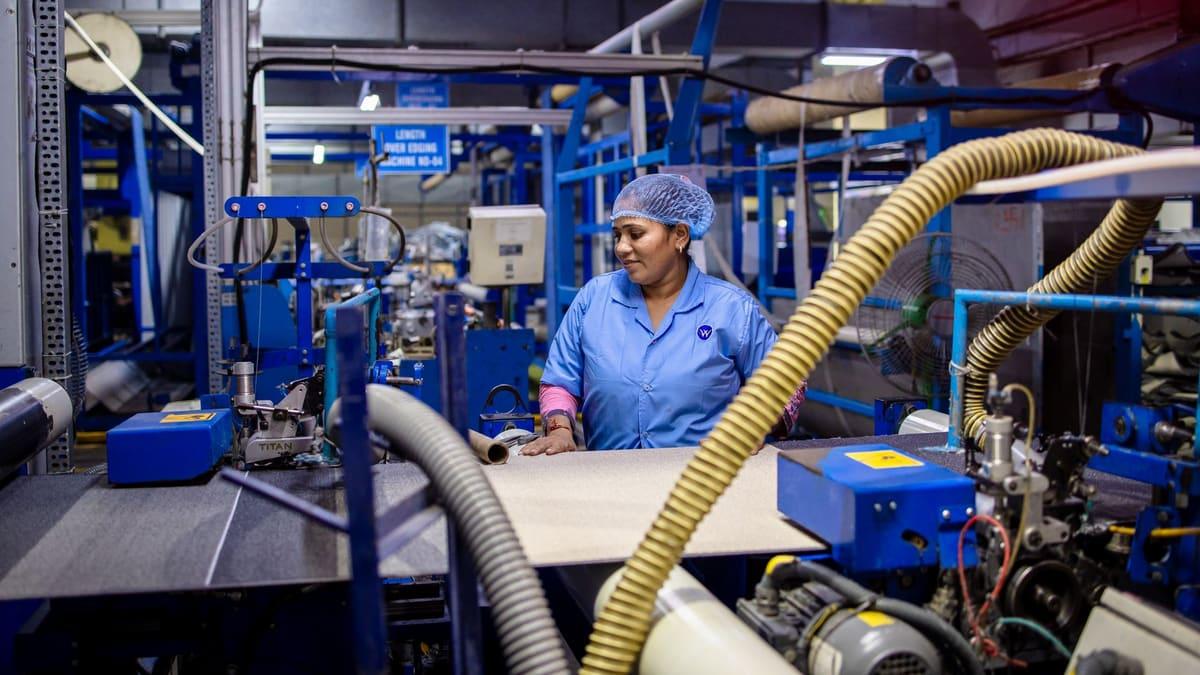
Manufacturing has the widest gap we see between what a company measures and what it could measure. Production on a whiteboard, quality on a clipboard, downtime not recorded at all.
The short answer
The right first project in manufacturing is almost never an ERP replacement. It is one focused tool, piloted on one line, capturing something you currently do not have. If it works, roll it out. If it does not, you have lost two weeks.
What actually goes wrong
Production tracked on a whiteboard. Which is accurate for exactly as long as somebody keeps updating it.
Quality checks on paper. Filed in a cabinet, which means they cannot be analysed and are painful in an audit.
Stock levels are a considered estimate. Somebody walks the floor and forms a view.
Downtime is not measured. So nobody can say which machine costs the most, which means nobody can justify fixing it.
The ERP is twenty years old. It cost a fortune, nobody can change it, and the vendor will not open the API.
Traceability met by hand. Which works right up until a customer audit.
What we build
- Shop floor data captureOn tablets, with barcode scanning, designed for gloves and noise.
- Quality inspectionStructured checks with photos, timestamped and searchable.
- Downtime loggingThe cheapest way to find out where your money is actually going.
- Traceability recordsBatch and component history that survives an audit.
- Production dashboardsSo the office can see the floor without walking it.
The constraints that matter here
You cannot risk downtime. Which is why a pilot on one line is the right shape for a first project.
The shop floor is not a tech-literate environment, and should not need to be. Large targets, minimal typing, works with gloves.
Factory conditions are hostile. Dust, temperature, dropped devices, poor Wi-Fi in the far corner. Offline capture is not optional.
ERP integration is the deciding question. If the API is open, plenty is possible. If it is not, the honest answer is a scheduled export and import, which is less elegant and works reliably.
Common questions
Can you replace our ERP?
No, and you should be sceptical of anyone who says they can in two weeks. What a sprint does well is the specific thing your ERP will not do, running alongside it.
Will it integrate with our existing systems?
If they have an API, yes. Many older ERP installations do not, and the practical answer is usually a scheduled export and import rather than live sync. That is less elegant and works reliably.
Can we pilot on one line first?
That is exactly how we would recommend doing it. One line, one shift, real data. If it works, roll it out. If it does not, you have lost two weeks rather than a year.